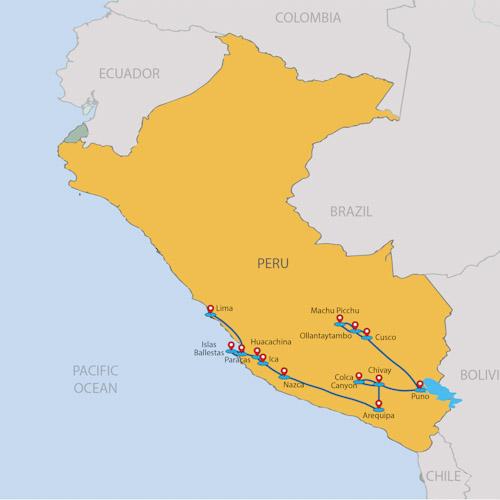
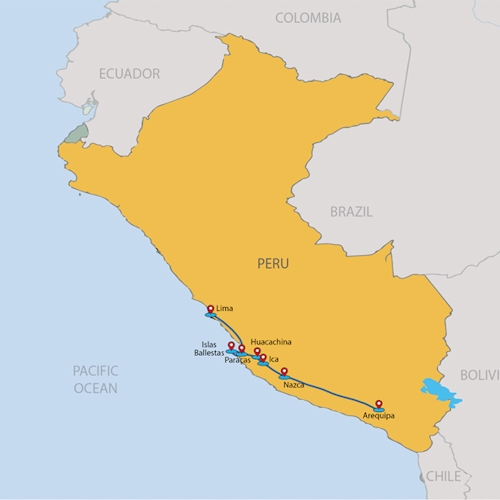
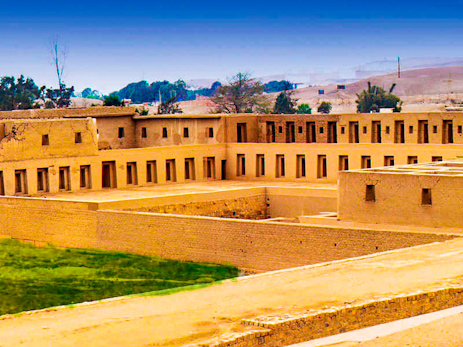
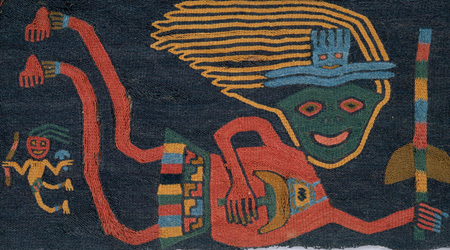
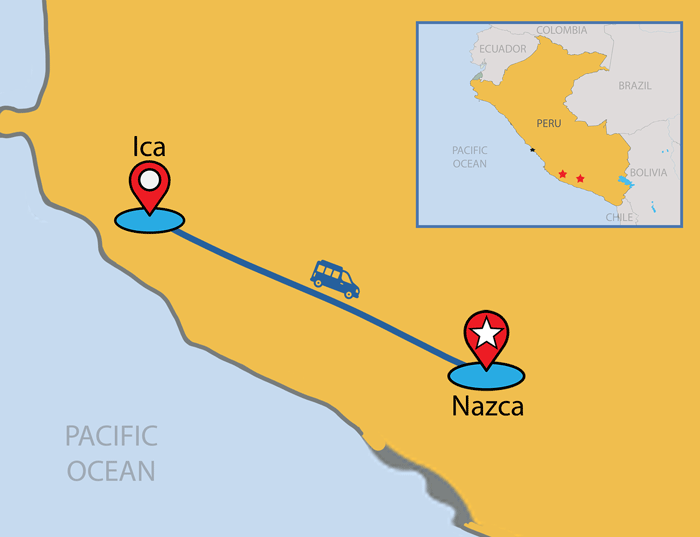
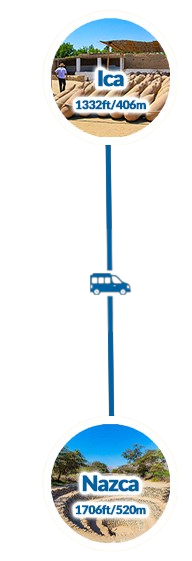
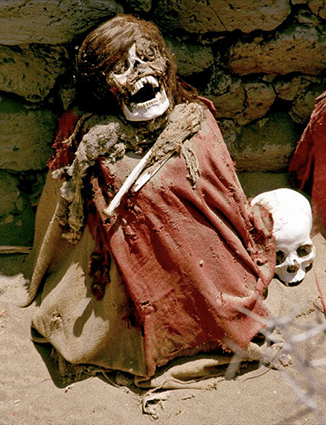
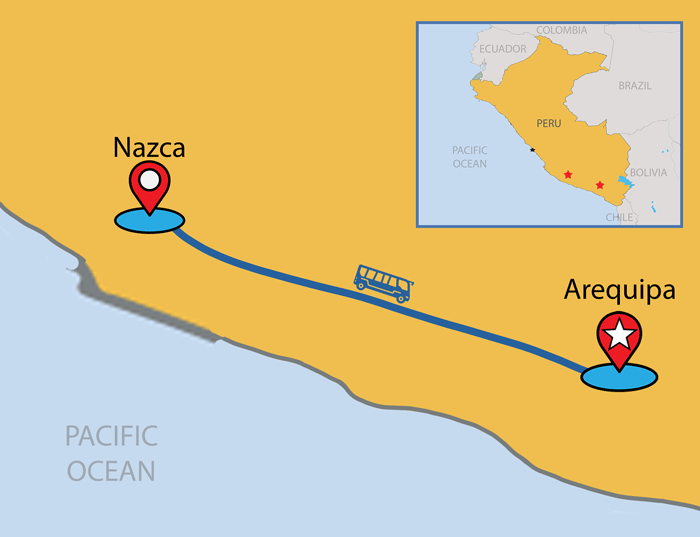
After breakfast, it’s a quick tour of the regional museum that highlights local cultures and ancient site excavations. Next, it’s a tour van ride to Nazca to check-in to the hotel, and then out of town for a tour of the Chauchilla Cemetery to see the mummified remains of ancient peoples (to-go lunch included). Then, back to Nazca where you can visit the Antonini Archeological Museum.
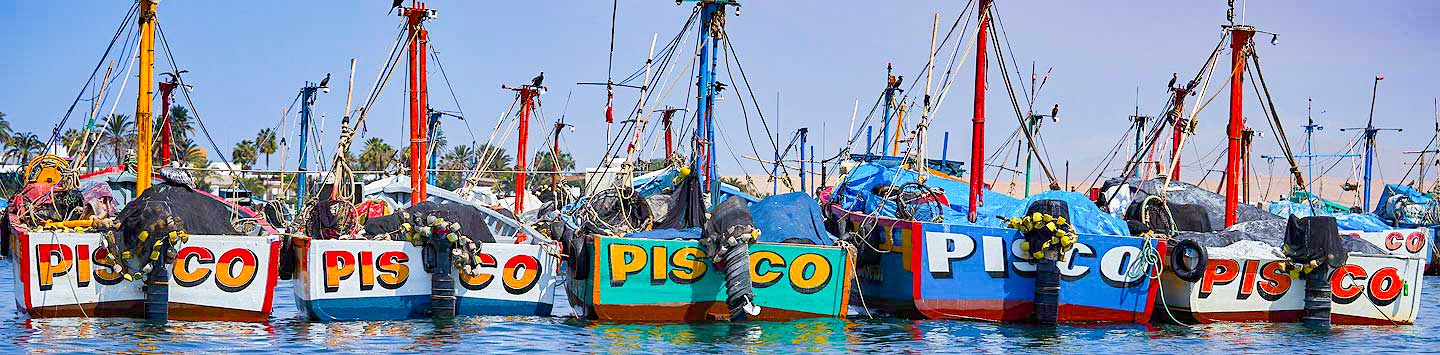
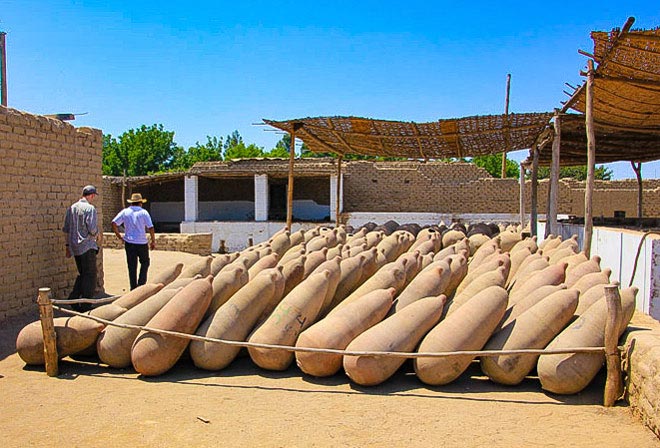
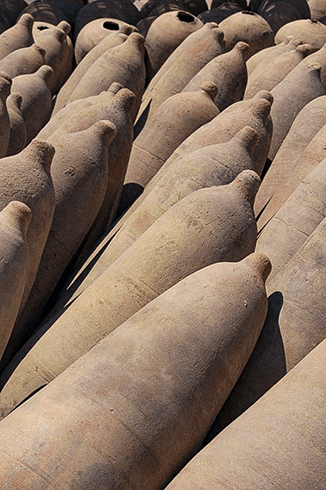
Pisco, Peru’s national drink, is produced at vineyards along the Peruvian coast and must be made in one of five designated regions. Many are still produced using traditional methods, including grape stomping and the utilization of copper pot stills (like whiskeys). Pisco is aged for a minimum of 3 months in glass or stainless steel, so as not to impart any other flavors. No additives are allowed, so the differences in taste come from the grape varietals used – usually Quebranta, but common black and Mollar grapes are also used. The most common way to drink pisco is as a pisco sour (created in Lima) that uses egg white, lime juice, simple syrup and bitters.
Chauchilla Cemetery is located about 20 miles out of Nazca and contains excavated graves showing pre-hispanic mummified remains dating back to the Nazca culture of 200AD. The bodies are well preserved due to the burial process involving resins, mud brick tombs, and dry air.
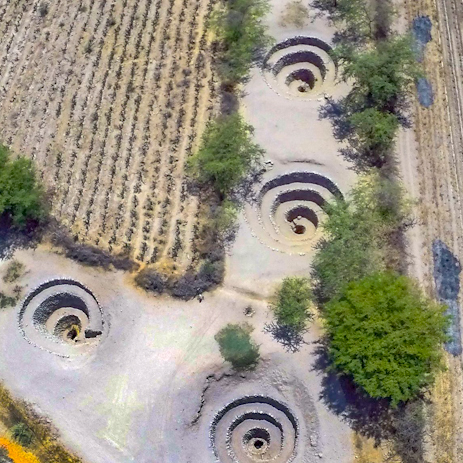
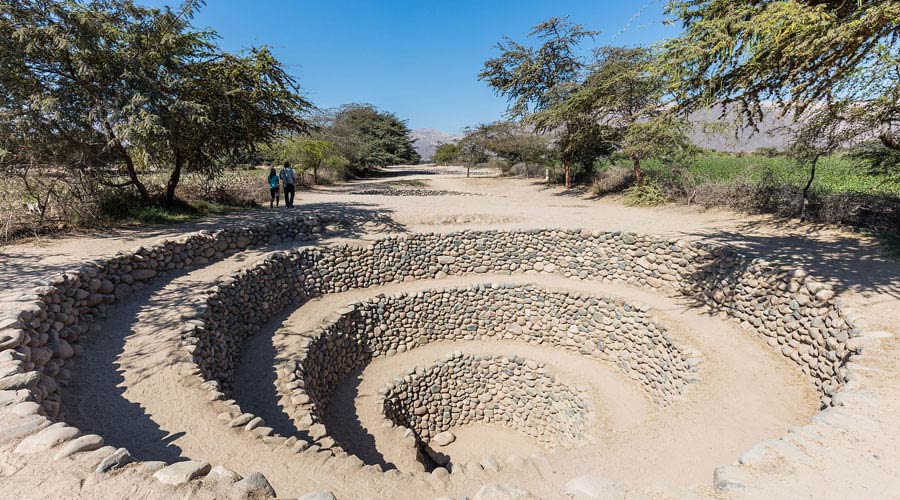
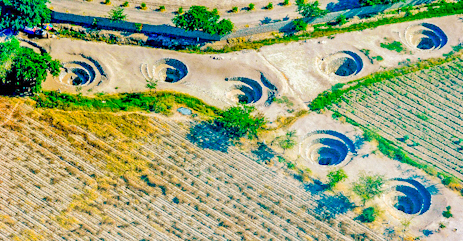
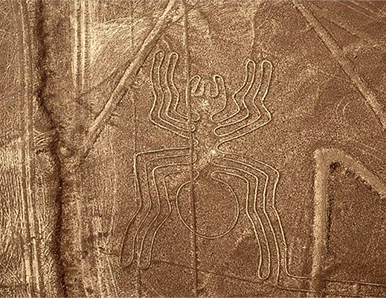
Nazca Antonini Museum is a great place to learn more about the history of the Nazca people to better understand the Chauchilla Cemetery, the aqueducts and the Nazca Lines, all under one roof and conveniently located in town.